


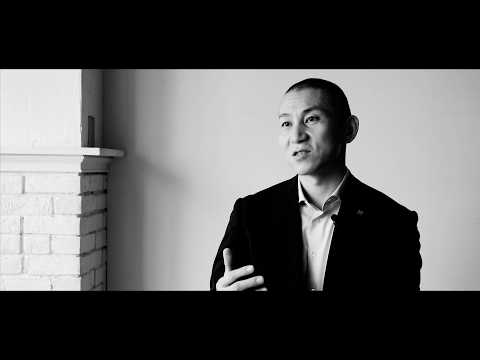

First, could you tell us about your background and the initiatives you have been involved in so far?
Certainly. As the third generation of the family business and the eldest son, I grew up with a strong awareness that I would one day take over the company, so I frequently attended company events from a young age. While I was still a university student, I had discussions with my father and made the decision relatively early to assume leadership.
After graduating, I joined the company immediately, and in 2008, at the age of 27, I succeeded my father as President and CEO.
Your appointment coincided with the year of the Lehman shock. What was that start like?
Up until then, I had an unfounded confidence that things would naturally work out once I became president. However, immediately after I took office, our performance declined. There are common stereotypes about third-generation leaders—people say things like “the third generation ruins the company” or dismiss them as spoiled heirs. Because of that, I felt an intense determination that I absolutely could not allow the company to fail.
I focused heavily on numbers, profits, and management, driven by a strong sense of responsibility to protect employees’ jobs and livelihoods.
As a result, we achieved a V-shaped recovery. On the other hand, I was not paying enough attention to more fundamental issues, such as workplace satisfaction or the company’s deeper purpose, and during that period, many employees ended up leaving.
Around that time, you encountered Kazuo Inamori’s philosophy through Seiwajyuku, correct?
Yes. I began learning about it while running the business, and over time, I shifted toward a management approach that places great importance on corporate philosophy. We uphold the principle of “the happiness of all employees, both materially and spiritually,” and actively create an environment where employees can work with energy and pride. These efforts led to our recognition by Great Place to Work.
At the same time, we also embrace the latter part of the philosophy— “to contribute to the progress and development of human society.”
What was the company’s original area of business?
We started with paintbrushes. From there, we expanded into industrial brushes for factories and eventually developed brushes for server rooms and data centers.
Could you tell us more about the background behind that expansion?
Our founder passed away at a young age, and my father took over the business at just 18 years old. At that time, we were selling brushes that lacked differentiation, which meant competing purely on price. Some people even said, “If the founder’s wife and children run this company, it will fail immediately.”
To survive, my father focused on how to differentiate our products and truly delight customers. While working, he studied marketing through Keio University’s correspondence program and applied what he learned directly to management and product development.
Since then, our history has been one of continually exploring new industries and developing products for specific applications. We expanded into industrial deburring, wire brushes for the automotive and steel industries, cleaning brushes for the food industry, and eventually pest-control brushes.
Our success formula has remained consistent: engage directly with the field, adapt to the intended use, and develop original products in-house.
What led you to focus on pest-control brushes?
Our business has always had two pillars: new products sold from inventory and custom-made solutions tailored to customer needs. We encountered a case where a custom brush was being used for pest control and thought, “This could be something meaningful.”
At first, it was developed for a single site as a special order, but we realized that many others likely faced the same challenge, so we decided to create a dedicated product.
This was about 20 years ago, during my father’s tenure as the second-generation leader. At the same time, there was a global shift toward reducing chemical use and managing environments more naturally, which helped the product gain acceptance and become established.
How did the product line evolve after that?
The core concept is physically blocking gaps to prevent pests from entering. Initially, we had only one type, but it couldn’t address every situation. Over time, we expanded the lineup to suit different locations and gap sizes, and eventually developed brushes designed for specific pests, such as centipedes or rodents.
I believe our first targets were cockroaches and ants.
Could you tell us about your overseas activities as well?
We made our first appearance at the annual NPA conference in the U.S., which is focused on pest management. Until then, our business had been mainly domestic, but through acquiring certifications and collaborative product improvements, we built up technical capabilities that could be patented. We wanted to leverage the recognition we had gained in Japan to help solve global challenges, so we decided to take on the international market.
At first, overseas markets were challenging because living environments and pest species are different from Japan, and people said our products “wouldn’t work.” However, by continuing to develop solutions tailored to local needs, perceptions began to change. Our overseas operations are primarily B2B as well.
Did you notice any changes in how the employees behaved or reacted?
When we prioritized numbers above everything else, employees often felt they were being controlled rather than empowered. That lack of vitality was ultimately management’s responsibility. Since shifting to philosophy-driven management, I’ve clearly seen a positive transformation in employee engagement and morale.
What principles guide you when running a family business?
As the third-generation leader, I’m very conscious of our history. The three brothers who originally founded the business eventually parted ways after a dispute, leading to the transition from Keihan Brush to BURRTEC. Because of that, family involvement was long viewed as a risk factor.
Around 2015, however, I began studying with the Japan Family Business Advisor Association, and my perspective changed. When managed properly, family can be a powerful asset, a source of support, and a genuine strength rather than a liability.
Since then, we’ve focused on leveraging family strengths while mitigating risks through clear systems and governance. Family businesses can take many forms—owner-managed, or with a separation between ownership and operations—and I want the next generation to have multiple options.
My mission as a third-generation leader is “to improve what we have and pass it on.” But if succession becomes the sole goal, life risks becoming merely a means to an end. The true purpose, I believe, is to live fully in the present. If we shine now, the business will naturally continue.
Looking ahead, what is your vision for society and the world?
Over the past few years, my values around how I use my life have changed. For me, business is about how we apply our strengths to society. In our case, that means deepening our expertise in brush technology while also expanding into adjacent fields, such as data centers.
It’s not enough for humans alone to prosper. We are sustained by the environment and by one another, and I believe we should live with gratitude for all forms of life. Rather than a “me-first” society, a world built on gratitude and consideration for others would be far better.
Are there new industries you hope to reach in the future?
At present, we’re not targeting entirely new industries. However, significant gaps still exist worldwide in pest control. There is tremendous potential for physical solutions that block entry points and reduce dependence on chemicals.
We are also working to develop brushes made from lower-environmental-impact materials.
Internationally, we are currently focusing on the United States due to its market size. In parts of Southeast Asia, including Singapore, chemicals that are no longer permitted in Japan are still widely used. Introducing physical pest-control solutions in these regions could reduce global environmental impact. Ultimately, our goal is to use brushes to clearly separate human living spaces from insect habitats, enabling coexistence rather than conflict.
How do you see your relationship with public health, environmental health, and community building?
Rather than viewing public health narrowly, I see a broader theme of building communities of people who want to create a better future together. We hope to connect individuals who don’t typically interact—such as those in healthcare, urban planning, and area management—and explore what we can achieve collectively.
As I’ve reflected more deeply on management and on the question of “why we live,” I’ve begun to view human life and insect life side by side, and my values have gradually evolved.
In practice, insects often enter buildings through small gaps, are eliminated with chemicals, and then discarded. When we consider the psychological and health impacts of these actions, there are cases where we should rethink our approach. Chemical treatments are sometimes necessary, but through awareness and small daily changes, we can greatly reduce our reliance on them.
More specifically, how can change be achieved?
In some cases, simply connecting one point to another can dramatically reduce insect intrusion across an entire area. I believe there is still much more that can be done, and that belief drives us forward.
Not all efforts lead to immediate business results, but we aim to use brush technology to influence values and awareness. Some initiatives evolve into smart business opportunities, while others are only possible through shared understanding and resonance—and we intend to continue pursuing both.
You’re also active in educational outreach, correct?
Yes. The response from students and children has been extremely positive, especially when we talk about insects. Since last year, I’ve also had opportunities to speak at children’s career workshops for elementary school students.
Finally, after 17 years as a leader, what question matters most to you now?
“Why do we run this business? And why do I live my life as a third-generation leader?” I continue to reflect on these questions while working with our employees to help every life shine. By deepening our expertise in brush technology, expanding into areas where we are needed, reducing environmental impact, and creating balance between people and insects, I hope our business can contribute to a future built on coexistence.
