
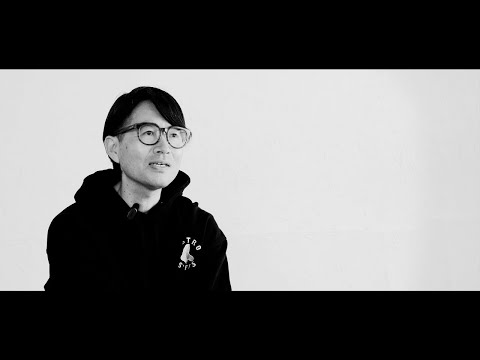

Could you introduce yourself, Mr. Watanabe, and tell us about the world you have seen so far?
Yes. I was born in Maebashi City, Gunma Prefecture, and continued to play baseball as a student until college. After that, I worked at an advertising agency in Tokyo for five years and then joined my father's electrical construction company.
The reason why I joined my father's company is because I respected him very much. I had the impression that he always used his time for me, such as taking me to and from baseball games since I was little, and I always wanted to help my father someday.
However, when I actually joined the company, I was not interested in electricity itself, and I had a hard time adjusting myself to the unique culture of the industry. Therefore, I think I had a very difficult time for about 10 or 15 years.
In a sense, that period of time was a time for me to immerse myself in my father's style and the customs of the industry. However, when I became the representative of the company, gradual changes began to take place.
The biggest thing was to reinterpret "electrical work" in my own way. As one's interpretation changes, one's expression naturally changes as well. In the process, I became very aware of "visions" and "values”.
At this stage, I was no longer so caught up in the term, "electrical engineering" itself, but rather was much more concerned with the question, "Who should we be as a company? There were many conflicts.
From there, how did you become involved in "community development" in your hometown?
At the same time, I met various people in the context of "community development" in my hometown and had the opportunity to tour the world. At the time, I went to Portland for the theme of "diversity" and to Silicon Valley to learn about tech trends.
In Silicon Valley, I could feel a connection to the technical context of electricity, and I strongly felt that "in the future, such digitized cities and lifestyles will emerge in Japan as well.
When I returned to Maebashi with this perspective, I had a sense that I could see things that others could not, and I was able to take various actions based on that sense. I began to receive comments from people around me such as, "You are an interesting company with interesting initiatives," or "You are doing unusual things even though you are an electrical construction company.
In this context, I set forth a vision of "being excited about the future of electricity. This vision was very important to me, and I decided to create a company that could deliver joy and excitement through electricity. I proceeded to build the company with this vision.
Of course, my father was still working at that time, and many times he would say to me, "What are you doing?" or "This is not an electrical construction company. But I kept telling my father over and over, "Please let me interpret and express myself in my own way.
That is why I have always felt that I want to cherish what my father and other predecessors have built as my “source.” . I was also always conscious of what kind of value I could provide to everyone referred to as our "clients.”
However, what was a little different between my father and myself was that I had my own strong context of "impact on society." That is why I feel that the natural social environment and framework have been put in place over the past few years.
What are you currently working on or what new challenges are you seeing?
As I was exposed to technology trends, I felt that the axis of what humans are looking for is strongly pulled toward the two axes of "pursuit of convenience" and "economic rationality”.
But what we are focusing on now is not simply convenience and efficiency, but rather "how the earth and human beings should be" or "what is the essential way of life for human beings?”
Of course, we are also looking at the frontiers of technology, but at the same time, we are also working with the primitive, undeveloped, sensory aspects of human beings. I am working on this project with an attitude of respecting the primitive part of human beings.
For example, we are actually building forests and creating environments where humans can live in harmony with animals, and we are also engaged in activities that encourage people to reexamine their natural behaviors and habits.
Moreover, it started with a desire to reexamine and reexperience the landscape and sensations that people have seen and felt over a time span of 1,000 or 2,000 years, rather than the short span of 100 or 200 years.
Therefore, I actively visit places where not only literature remains, but also places where culture and scenery have actually been woven over 2,000 years. Furthermore, even overseas, I deliberately visit areas where civilization has not yet penetrated so deeply, in order to observe and experience them for myself.
Such activities are the biggest theme for us now.
Do you have any feelings about the human activities in those non-"economic people" areas?
Yes I do. Right now, I feel like I'm just going with the flow, and it is very "easy" for me.
Of course, there is inconvenience. It is inconvenient and not economically rational. But it is still "easy.” It makes me comfortable.
I think there are words like so-called "wellbeing," but for me, "being at ease" is very important. Living with animals, how I spend my time, how I build relationships with people—in all of these areas, I feel that I am truly living a "comfortable life."
This is true not only for myself, but also for my staff. I try not to interfere too much and allow each person to move freely on his or her own initiative.
For this reason, we are very conscious of "designing" as a place. This is true not only for organizations, but also for local communities.
My point of view is not to use compelling force to control people, but to be aware of how to cross each person's personality and individuality to make it more interesting.
What other creatures besides humans are currently active?
We have a horse now and will be adding two more soon, so we will have a total of three horses. We have two donkeys. Then there is the dog. The dogs are also natural treasures, and we have two Ainu dogs that are believed to have been with the Jomon people when they hunted.
We also have cats and crows that come to our house on their own rather than being "kept" by us. Cats and crows are a bit of a hybrid and are common on our property. These are the species that are with us now.
What kind of scenery and way of being do you feel you’d like to discover in the future?
To be honest, I don't have a clear vision of what I want to do anymore.
I think this is because I have already grasped the "soil" that will become the starting point within me—the root. I think I have already grasped the "soil"—the roots that are the starting point of my work. I have completely swung to the mindset that "this way of being is important".
So, the rest is just a natural progression of things.
Of course, at first, I was puzzled, and it took a lot of courage. For example, when the donkey first arrived, employees and others would ask, "Why do you have a donkey in your company?" But we had to be prepared to shake that off.
The same is true when creating a forest. Then the forest expands on its own, the number of animal species increases, and there is a sense of being pulled along and involved, including the children, local people, and our involvement in local festivals.
Nowadays, there is the concept of "UX". It is often used in the sense of maximum efficiency or maximum results.
We have been involved with the local people and local festivals, while maintaining the purity of our daily routine, which is what a human being should do. I have recently been thinking that we are creating our own UX through these natural relationships.
But honestly speaking, if we think only in terms of "economic rationality," I feel that many people are giving up more and more what is really important to them for the sake of efficiency under the term of "UX.
What happens then is that we are always in a state of having to "keep making" something. You are always in a flurry of activity, and you are always on the spot. But that is different from "being born," and I think it is very difficult.
So, I think that my colleagues who are aware of these things—the people I work with - resonate with the same sense of language, or rather, the same sense of feelings.
How do you see such people?
We have a sort of "super-independent decentralized" approach, and we basically leave everything to them. The way we think, the way we work, the value, and everything.
So, we don't interfere strongly, and they don't interfere much either. In this way, as time goes by, a "design" naturally emerges.
The designs are very diverse, but from the outside, it looks like "this is the design of Sowa Delight.” But when you look at it from the outside, you can see that this is the design of Sowa Delight. I think we have that kind of relationship.
But it is very difficult to explain in words. When I try to put it into words, it takes a lot of time, and it often doesn't come across well.
Then I'll just go ahead and do it already and show them our backs. That is my stance. I've done it, and I've won.
I think that will create a sense of, "Oh, the lines of the future have moved a bit.
So, as we are now working in a "humanistic" way, there may no longer be a clear goal that we should "move toward. I feel that way.
What kind of future do you envision, Mr. Watanabe?
It's very difficult to verbalize that, but if I were to put it in a closer way, I would say that I think everyone should be flatter. I'm not just talking about gender issues, economic hierarchies, generational differences, and so on, but "species" as well. I think everything should be flat.
I think that would change the way we design, the way we create relationships, and everything else.
What kind of life do you actually lead?
When I talk about these things, you might think, "You lead a very simple and quiet life, don't you?" But in reality, I lead a normal life just like everyone else. However, at any given moment, I might think, "Let's look at this from a different perspective," or "What would it look like if I added the perspective of flatness? I am always aware of that.
I think that if such a perspective were to spread throughout the globe, it would lead to a kinder, gentler world.
Is it possible that the human mindset will naturally change as a natural process?
I believe that it is. Since I was born in this world and in this time, I would be happy if my identity could work in the direction of making the world a better place, even if only a little.
Let me ask you about your vision for the future.
When I became a representative, I had a vision of "being excited about the future of electricity," and I have been working on various initiatives in line with that vision. But at some point, while working on the theme of "forestation," I began to have doubts.
When I was exposed to cutting-edge tech trends in Silicon Valley, I wondered, "Do we really need to go all the way with digital and big data for this?" I thought, "Why bother with digital and big data?" I thought, "There might be other things that really need to be done.”
After that, I went to China to visit Shanghai and Shenzhen. What I saw there was a society where everything we do is databased and managed. It's much more efficient, and there are more touch points. But I wondered if that was really a "good thing".
Was it a discomfort with the impact of technological advancement?
Yes, it was. With the evolution of various technologies such as metaverse, virtual approaches, and agricultural science, I felt that they could all be lumped together under the term "digital."
That was the first time I thought, "I’d like to know what it was like when there was no electricity.
What was your perspective, going back to the time when there was no electricity?
Somehow, I felt that electricity was the reason why our human-centered civilization developed so rapidly. I looked up the starting point of this development.
Then, the origin of electricity started around 600 BC, when the Greek philosopher Thales discovered static electricity by rubbing amber. From there, Tesla invented alternating current, Einstein theorized nuclear power, and so on ... Electricity as a source of energy continued to expand.
And then this idea occurred to me. I wondered what the population of the earth was at that time. I looked it up, and found that it was about 100 million. Now it is 8 to 9 billion, which means that the population has increased 80 times.
So, the human population has increased rapidly since the discovery of electricity.
Yes. Electricity is convenient, but it may be an imbalance for other living things. There is an environmental burden, and humanity now has technology that could affect not only the earth, but also the universe.
I also realized that our smallest human "discovery" can disrupt the continuity of the universe. The trend that began with Thales' discovery of static electricity is affecting the earth and the universe. But on the other hand, I also think that there is a possibility that we can restore continuity in a healthy direction through small discoveries and actions.
Did you think that realization was the basis for your current activities?
That is exactly what we are doing. What is important to me now is "how people should be." How will humanity, whose population has increased 80-fold, handle electricity?? My theme is to keep challenging that question.
Another feeling I have recently is that we may not be "people" anymore. I feel that we are somehow able to exist in this ecosystem as non-human beings.
You mentioned the term "non-human." What kind of feeling is that?
I have the feeling that we no longer exist as "human beings" or that we exist on this earth as something other than human beings. Of course, I am not making fun of them, but I believe that our current lifestyle and environment have become so far removed from the true nature of human beings.
And when I think about it, I feel that our mindset as "non-humans" is also starting to give up or give up on the idea that "this is just the way it is.
But on the other hand, there are certainly "people," and I’d like the younger generation and children in particular to cultivate a strong sense of humanity. I would be happy if they could take action to weave this into the future.
I do not intend to force people to do this or that, or to say, "Let's all do this," or "This is the right path. But if there is a mainstream in society, I think it is important to show the value and ways of being that are on the opposite side of that mainstream.
Taro Okamoto used to say "contrarianism," and I think that people cannot find balance within themselves unless they are standing on opposite sides of an idea. If it is one-sided, it will become propaganda.
That is why I think it is very important for entrepreneurs of the future to present to today's society that there is such a way of being.
For example, pest control companies are usually pretty boring and uninteresting, right? However, I believe that adding a design or something that appeals to people will generate a response that has never been seen before.
Oh, by the way, you mentioned Holland, right? It's called Micropia.
There was an exhibit called Neighborhood, and it was like, "There are all these microbes in your room. And the curators were collecting the bacteria on the bills every day and growing them.
It is amazing that they are putting them on display, but I felt it would be interesting to shift the Japanese people's original sense of "cleanliness" and "unsanitary" a bit.
You also had a poop exhibition at 21_21 DESIGN SIGHT.
I'm thinking of building a toilet on top of the tower with clear PVC pipe at my house next time.
I’m planning to build a toilet about 6 to 7 meters high and use PVC pipes to carry the waste down to the bottom. I want to connect it directly to the field with a proper water supply system as well.
It would be great if kids could use it too. I think it would also enlighten them that they are not dirty. I believe that defecation is an act of encountering a more primitive version of oneself.
Is the same idea true for toilets in the forest?
Yes, yes. I made that one too, based on the concept of "encountering your primitive self. The act of defecation itself is part of circulation.
In fact, my crows are like that. I treat them as if they are my "partners”.
Do the animals miss the general management?
Incidentally, the three species—horses, crows, and dogs—have a very clear personal space and will not approach us if we are not in the right state of mind. We cannot control them. Horses are very powerful, crows fly away easily, and dogs sometimes show their fangs at us.
People who are managers don't enter into the "world" of animals. They do not even enter into the animal's "world." They just say, "I didn't know you kept animals," or "I can smell them. The animals don't approach them, and they just run away.
The animals come to the children properly. So, even though there are various issues such as leadership, it is fastest to let the animals decide. They will tell us, "You're suited for this," or "You can't do this. Because my own mind is reflected, I gain new insights every time. That’s why I find it so interesting.