
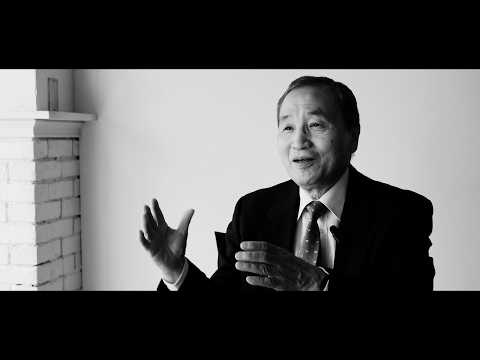

Could you tell us about the starting point that led you to become a researcher?
I’m 75 years old now, and I never imagined that I would end up pursuing a career as a researcher. In fact, I didn’t originally plan to attend university at all. I grew up in Kokura, Kitakyushu. When I was in elementary school, our summer homework was divided by gender: boys collected insects, while girls collected plants. I chose insect collecting, and my father bought me nothing more than a net. I would run all over the hills and fields chasing insects.
In junior high school, I joined an insect-collecting club and began traveling farther to search for specimens. In high school, I stayed with the same group of friends and joined the biology club, spending nearly all my time collecting insects. It was during this period that a major turning point in my life occurred.
In the fall of my second year of high school, I joined a school trip to Tokyo and stayed at the Obunsha student hall near Juntendo University in Ochanomizu. One evening, as Dr. Keijiro Suruga was coming down the stairs, I happened to meet him. He struck up a conversation with me, and it flowed naturally. Even though it was already late, he kindly showed me around the University of Tokyo campus. When we parted, he said, “If you ever come back to Tokyo, stay at my place.”
Even after I returned to Kyushu, Dr. Suruga continued to stay in touch. That encounter sparked a deep fascination with Tokyo. Later, I learned that Tamagawa University’s Faculty of Agriculture had an entomology laboratory, so I applied. During my university years, Dr. Suruga often took me out for meals and movies and even allowed me to stay at his home regularly.
How did you decide on your research topic during your undergraduate years?
When I joined the entomology laboratory in my third year and began preparing my graduation thesis, I discussed possible research topics with Dr. Suruga. He told me, “There are insects in the medical world that cause disease,” which immediately caught my interest. I then went to the Faculty of Agriculture library and started reading about medically important insects. As I learned more, I came to realize that mosquitoes were the most problematic, and I decided to focus my research on them.
At first, however, Professor Ichiji Okada, the head of the faculty, discouraged me, saying, “Medical research isn’t allowed here.” I was completely at a loss. Later, I realized that he meant research involving pathogens was not permitted—not mosquito research itself. Once that became clear, I was able to proceed with my work.
At the time, the entomology lab was conducting bioassays in which products derived from honeybees—royal jelly and honey—were fed to insects. I decided to try feeding royal jelly to mosquitoes. To my surprise, they laid eggs. Today, this is well known, but at the time, it was believed to be impossible for mosquitoes to lay eggs without a blood meal. I repeated the experiment many times, and the results were always the same. Although the number of eggs was smaller than after blood feeding, egg-laying clearly occurred.
Professor Okada said, “I can’t judge these results myself,” and introduced me to Dr. Teruhiko Hosoi of Chiba University, who was studying mosquitoes at the time.
Dr. Hosoi, the author of Biology of Mosquitoes published by Kawade Shobo, was initially skeptical. He said, “Eshita, these results must be wrong—you fed them blood, didn’t you?”
Later, I understood his surprise. He had previously conducted similar experiments using amino acids on Culex pipiens pallens, but they had failed. The mosquitoes I used were Aedes albopictus, and royal jelly contains a rich mixture of amino acids, which explained the difference. The fact that mosquitoes laid eggs without any blood must have seemed incredible to him.
During my third and fourth undergraduate years, I devoted myself entirely to research, working from morning until night. Even in mid-winter, I placed heaters in fish tanks to maintain the water at 25°C so I could rear mosquito larvae. The result was a graduation thesis exceeding 100 pages.
What prompted your choice of career path and your start as a researcher?
At the time, my parents were still living in Kitakyushu, shortly after the city’s administrative merger. I had heard that I might be able to secure a job at city hall through personal connections, so I initially planned to return home.
However, Professor Okada reportedly told my mother, “Eshita may be suited for research. Why not let him spend a year in Tokyo and see how it goes?” After discussing it with my father, we found that the job in Kitakyushu could wait.
I began searching for a place to conduct research in Tokyo. Through a senior colleague from my university days—who had just returned from the WHO and was working in parasitology at the Institute of Medical Science, the University of Tokyo—I was accepted as a research student in Professor Manabu Sasa’s laboratory.
This was a period when many private medical schools were being established, and I was offered a position as a research assistant at Teikyo University School of Medicine. Today, even with a doctoral degree, such a position would be hard to obtain, but at that time, there was a shortage of qualified personnel, so it was possible.
My father told me, “Do what you like,” so I accepted, thinking I would stay only briefly. That position eventually led me to earn a Ph.D. in medicine. I received guidance from many mentors, and those experiences have played a crucial role in shaping my career. My specialization has remained focused on mosquito research ever since my undergraduate days.
To broaden my perspective, I also spent two years in the United States studying molecular virology. It was extremely challenging, as I had no background in molecular biology, virology, or biochemistry, but in retrospect, it was an invaluable experience.
Do you see differences between the past and present in how young researchers approach their careers and studying abroad?
Fifty years ago, it was standard practice for researchers to study abroad in the same field as their specialization. Today, however, young researchers tend to build a solid foundation of basic knowledge and then branch into almost entirely different fields, developing a much broader perspective in the process.
These days, studying abroad is no longer an absolute requirement. If the research environment in Japan is strong, it has become easier to pursue postdoctoral work domestically after earning a degree. Overseas institutions often offer excellent resources and high evaluations, which can make it difficult for researchers to return to Japan. At the same time, long periods abroad can weaken ties to domestic research networks.
For these reasons, the model now seems to favor postdoctoral research in strong domestic environments, while engaging with international collaborators through joint research projects as needed.
After returning to Japan, I realized very clearly that researchers need a complete set of conditions—including adequate funding and a supportive environment—to continue their work. Even with strong ideas, it is difficult to produce tangible outcomes, such as published papers, without sufficient resources. I think of it like Liebig’s law of the minimum—the image of a barrel with uneven staves: one must strengthen their weakest points in order to hold more “water” and achieve greater results.
Could you tell us about your experience in Africa with JICA and how it influenced your subsequent career?
After returning from my studies in the United States, I went through a frustrating two-year period during which my research did not produce any results. It was around that time that JICA approached me about going to Africa. I ended up spending two years working in a completely different research field.
Because I had studied molecular biology in the U.S., I worked on vaccine development for Trypanosoma in Africa. I understood the overall research strategy, so I felt I could manage even starting from scratch. At the time, there was no internet, and information about Kenya was hard to come by. I struggled with the decision of whether to go alone or bring my family, but my wife and son said they wanted to come with me, so we decided to go together. Many things happened during those two years, but both professionally and personally, it was a very enjoyable and fulfilling period.
After returning to Japan, I rejoined Teikyo University, but two years later I moved to the Faculty of Medicine at Kurume University in Kyushu. After that, I transferred to the Faculty of Medicine at Oita University, where I eventually reached retirement.
In fact, when I earned my degree at Teikyo University, I had been conducting experiments involving mosquitoes and viruses. However, Kurume University did not have the necessary facilities, so I had to put that line of research on hold. Although it seemed unlikely that I could continue the same work, I transported related research papers and experimental equipment—enough to fill a five-ton truck.
When I later moved from Kurume University to Oita University, I finally found an environment that supported research on mosquitoes and pathogens such as dengue and Japanese encephalitis. At last, I was able to reopen the sealed boxes of experimental equipment and resume my research. At the time, there were almost no other facilities in Japan besides Oita University that could study mosquito vectors and mosquito-borne pathogens simultaneously. As a result, it was relatively easy to secure research funding, which was a great help.
Compared with the past, submitting papers has become much more demanding. When a manuscript is accepted by a high-quality journal, publication fees can be extremely high, making it nearly impossible to cover the costs personally without public research funding. To conduct strong research and publish in reputable journals today, a solid research environment—encompassing funding, equipment, and organizational support—has become increasingly essential.
After retiring from Oita University at the age of 65, I was asked by Hokkaido University to help establish an infection laboratory using mosquitoes. During my seven-year stay in Hokkaido, I set up the laboratory so that it could operate properly, while also training graduate students.
Today, I feel reassured knowing that the facility’s research and maintenance are being carried out by dedicated staff, including a professor of virology and an associate professor specializing in parasitology and medical entomology.
Looking at the historical changes in mosquito-borne infectious diseases in Japan, what do you foresee for the future?
When I joined the Department of Parasitology at the Institute of Medical Science, University of Tokyo, malaria had already disappeared from Japan. The primary reason was environmental change. Anopheles mosquitoes breed in rice paddies, but with urbanization, infected mosquitoes and humans no longer came into natural contact. The same applied to filariasis, which also disappeared, and similar trends have been observed with Japanese encephalitis.
At the time, there was widespread belief that malaria could be eradicated worldwide using DDT (dichloro-diphenyl-trichloroethane). However, mosquito resistance to insecticides emerged, and the WHO temporarily scaled back its efforts. Later, the “Roll Back Malaria” initiative was launched, followed by current malaria eradication programs.
In the postwar period, viral dengue fever temporarily appeared in major Japanese port cities, but it eventually disappeared. With environmental improvements, people began to believe that infectious diseases were no longer a threat in Japan. As a result, university departments focused on infectious diseases were quietly downsized or abolished, and specialist training declined. This is the reality we face today.
However, as international air travel increased, people infected abroad began entering Japan during incubation periods, triggering sudden domestic outbreaks of dengue fever, such as the one in Yoyogi Park. While the types of diseases change over time, we must assume that new infectious diseases may continue to emerge in Japan in the future. To prepare, education and training of skilled personnel are absolutely essential.
In terms of preparedness—such as BSL facilities and issues like airport malaria—how well prepared are we at present?
In Japan, BSL-4 (Biosafety Level 4) facilities have already been established in Tokyo and, more recently, at Nagasaki University. Looking ahead, similar facilities may be developed in regions such as Osaka, Tohoku, and Hokkaido.
In addition, BSL-3 facilities are already in place at universities throughout the country, and the number of researchers who have received training at CDC (Centers for Disease Control and Prevention) is steadily increasing. Overall, I believe Japan has now achieved a certain level of preparedness in terms of facility infrastructure and operational capability.
Today, PCR technology has dramatically improved the sensitivity of pathogen detection. This means that we need to reexamine questions such as whether mosquito species found in Japan other than Aedes albopictus—species not mentioned in textbooks—might also be capable of transmitting dengue virus. While Aedes albopictus has not yet become established in Hokkaido, other mosquito species may potentially serve as vectors. These possibilities should therefore be examined under controlled conditions in BSL laboratories.
In Europe, there have been reports of so-called “airport malaria” or “baggage malaria,” in which mosquitoes transported in aircraft or cargo transmit infection. Japan has also experienced similar cases: during the period when Haneda was the country’s only international airport, malaria was reported in individuals with no history of overseas travel.
We have now entered an era in which it is essential to proactively assess how susceptible Japanese mosquito species may be to previously unrecognized pathogens.
What are your thoughts on the differences between Japan and the United States in their education and research systems, and on the need for schools of public health?
In the United States, Schools of Public Health exist as independent entities separate from medical schools. These schools bring together individuals from diverse backgrounds who are not necessarily physicians, and they train specialists in fields such as parasitology and other natural sciences. Graduates can also move into faculties of agriculture or veterinary medicine, which creates a broad and flexible pool of expertise. This structure allows researchers to shift their focus quickly in response to emerging trends and to pursue grant funding with a high degree of flexibility.
In Japan, even when research funding is provided by AMED (the Japan Agency for Medical Research and Development), there are currently no public health departments that train personnel capable of immediately conducting mosquito-based experiments. Although the Institute of Tropical Medicine at Nagasaki University offers training programs for both physicians and non-physicians, very few participants appear to go on to become independent researchers.
I believe that Japan needs at least one “U.S.-style School of Public Health” or a comprehensive faculty equivalent. Originally, when Okinawa was returned to Japan, there were plans to establish a School of Public Health rather than a medical school, but unfortunately, these plans were eventually changed to the establishment of a medical school.
I think there must be an educational and research environment outside of medical schools where infectious diseases can be taught systematically. Most medical school graduates go on to become clinicians, and as a result, only a small proportion enter basic medical research. By establishing a U.S.-style School of Public Health in Japan, we could significantly broaden the base of professionals engaged in infectious disease research and public health—this is my firm belief.
How should responsibilities be divided between government agencies and the private sector, such as pest control companies?
Based on my experience during the COVID-19 pandemic, simply leaving everything to the private sector is not an effective approach. Even when government agencies contract private companies, clear agreements and detailed specifications must be established in advance among national and local governments and public health authorities before any action is taken. Issues of liability and responsibility cannot be left ambiguous.
According to guidance from the CDC and the WHO, indiscriminate chemical spraying is no longer recommended. Fundamental measures, such as thorough daily cleaning—particularly of high-touch surfaces—and frequent wiping, remain essential.
At the same time, it is undeniable that enormous financial resources were spent during the COVID-19 response. This is precisely why it is so important to establish a strong foundation of public health knowledge within both the government and the private sector.
What are your thoughts on possible changes in the structure of the National Institute of Infectious Diseases (NIID)?
The NIID has been undergoing structural changes, including corporatization, and its name may change following the integration process. Around the time it transitioned from the National Institute of Health, Japan, to the NIID, there were rumors that departments related to medical entomology might be eliminated. I don’t know the details, but I am glad those departments survived. Without them, it would have been impossible for only a few university departments to handle these issues.
In the United States, organizations like the NIH (the National Institutes of Health) and CDC provide a well-structured system for public health. When Japan shifted responsibilities to the NIID, it was originally placed directly under the Ministry of Health, Labour and Welfare. I think it has been a positive development that the institute established a division focused on medical entomology, enabling research specifically related to pathogens.
However, during outbreaks of diseases like dengue fever, there is often pressure for all researchers to focus exclusively on that specific problem, which can cause research priorities to shift frequently. Currently, the institute has been reorganized again through further integration, but I hope that it can maintain a system similar to that of the U.S. CDC, providing continuity and stability in public health research.
What attitude is necessary to achieve results in fieldwork overseas?
Even those who go abroad with JICA sometimes find themselves in arguments with local people at first, due to differences in position or perspective. I believe it’s important to persevere through these challenges, recognize the strengths of others, and ultimately aim to be appreciated for “doing so much for their country.”
In terms of mosquito control, while spraying insecticides can provide quick results, resistance inevitably develops. It is therefore necessary to take a longer-term approach, incorporating integrated control strategies that include ecological management.
In the case of Dr. Yuichiro Tahara, who was dispatched to Guatemala by JICA, he rented an entire thatched-roof house and conducted a thorough survey to determine exactly which species of assassin bugs were present and how many were hiding in each location. Only after this painstaking work could a clear strategy for extermination be developed. Through this kind of careful, step-by-step approach, Dr. Tahara eventually received recognition from JICA for his efforts.
On the other hand, implementing such measures within Japan can be much more challenging. In dengue-endemic regions of Southeast Asia, fogging devices are standard for mosquito control. When dengue fever occurred in Tokyo, some argued that using carbon dioxide–based formulations, which disperse farther than foggers, would be sufficient. Even when fogging devices were included in official manuals, they were rarely used in practice because of noise, resident complaints about the smoke, and the complexity of operation.
We did discuss this issue with the Ministry of Health, Labour and Welfare, but in the end, nothing changed—and the dengue outbreak subsided on its own.
Could you tell us about the current state of Japan–U.S. frameworks and academic networks?
The framework known as “Japan–U.S. Medical Cooperation” originates from talks between Prime Minister Sato and President Johnson, and the agreement for cooperation on infectious diseases between the two countries remains in effect today. There was even a meeting in Kyoto that was considered the “final conference,” yet the framework has continued, albeit on a modest scale.
Under the current Trump administration, however, infectious diseases have not been a policy priority. As a result, NIH (the National Institutes of Health) researchers were unable to secure travel funding and could not attend a conference in Japan held in 2025. Instead, NIH participants joined the meeting online.
Despite various challenges on the Japanese side, efforts have been made to sustain the Japan–U.S. Medical Cooperation meetings by holding them in conjunction with the “Asia–Pacific Conference on Infectious Diseases.” This format has broadened participation to include researchers from Southeast Asia and South Korea, allowing the Japan–U.S. medical meetings to continue in an adapted form.
Unlike in the past, there is now almost no scenario in which university-based infectious disease researchers lead academic conferences. At best, only the experiences of people from my generation remain to a limited extent, and I feel that today’s generation of university professors has had far fewer opportunities to gain such experience.
There are certainly young researchers studying infectious diseases, but realistically, they have little opportunity to consider how these efforts should be advanced nationally in the long term. I believe this is an issue we need to address seriously now.
When it comes to institutional reform and continuity in human resources, what do you see as the key factors?
At the time when Japan’s Infectious Diseases Control Law was revised for the first time in a century, there were individuals within the Ministry of Health, Labour and Welfare who remained in the same positions for an unusually long period, rather than being rapidly reassigned as is normally the case. Because they stayed in charge of the same department, it became possible to say, “This is the moment to revise the Infectious Diseases Control Law,” and even after the revision, they continued overseeing its implementation. I have heard that one of those individuals is now a professor at the Institute of Tropical Medicine at Nagasaki University.
The Institute of Tropical Medicine at Nagasaki University, which conducts infectious disease research, receives strong support from both the Ministry of Education and the Ministry of Health, Labour and Welfare, and offers a variety of programs, including training courses. I think this is an excellent example of how continuity enables both institutional systems and on-the-ground practice to advance together.
Finally, what do you believe Japan truly needs right now?
Above all, I believe Japan needs to properly establish at least one U.S.-style School of Public Health within its university system. Medical schools alone struggle to cultivate the diverse range of human resources needed to confront a wide variety of infectious diseases. There is a strong need to create programs that train professionals from diverse backgrounds, enabling them to acquire integrated theoretical and practical training in infectious disease–focused basic medical sciences, including public health, medical entomology, parasitology, bacteriology, virology, molecular biology, and epidemiology, and to act swiftly in response to emerging infectious disease threats.
I strongly believe that now is the time for Japan to make a decisive commitment to investing seriously in human resource development—the most time-consuming yet essential preparation—so that the country can respond effectively to any infectious diseases that may arise in the future.