
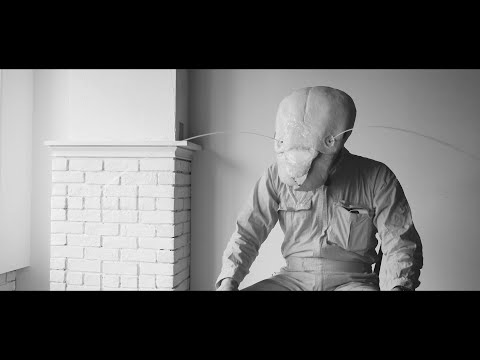

Could you tell us about your background?
To be honest, I’m quite nervous. Coming to places like Shibuya or Harajuku is unprecedented for someone like me. We’ve been around for about 200 million years. That’s right—the Jurassic period. Can you even grasp that timespan? Back then, we had wings. They found pollen in our stomachs during analysis, so we must’ve fed on flowers. We were vegetarians. But now? We eat meat. Only meat. It might sound horrifying to vegetarians, but there's no other choice. If you want to survive in the world I live in, you have to be a predator. It’s as simple as that.
Where do you live now?
Along mountain streams, in damp, cave-like places. I can’t survive anywhere else. If it gets even slightly dry, my body shrivels up like a dried leaf. It’s instant death. So, I have to stay in moist environments.
Who are your neighbors?
There are many. For instance, the giant Iizuka earthworm. It’s dozens, maybe hundreds of times larger than me. They dig tunnels through the soil.
Afterwards, they defecate. Their sticky droppings are full of organic matter because they eat fallen leaves. Springtails, mites, and fungi gather around it. It’s an ecosystem. A cycle. We use their tunnels, and everyone feeds off what’s left behind.
So their feces support the whole ecosystem?
Exactly. That sticky waste builds up in the crevices of talus slopes—just like bat guano in caves. The rockfalls form gaps, and those gaps become passageways up to one or two meters deep. When they’re all connected, it creates an underground world like a cave. But talus slopes are fragile. They collapse easily. The earthworm’s waste acts like a glue, holding everything together. It’s thanks to them that we can live there.
Have scree slopes always existed since ancient times?
Yes, they have. Scree slopes are places where rocks are exposed, right? Even back in the time of our ancestors, there were massive tectonic shifts happening on the scale of continental drift. Various plates were moving—colliding, separating. In the human world, the term “plate tectonics” came about around the 1970s, didn’t it?
But those kinds of phenomena had been occurring long before that. When tectonic plates collide, uplift can occur and rocks rise to the surface; conversely, when soil erodes away, rocks become exposed. Those rocks get weathered by rain and wind, cracking and eventually tumbling down. When it rains in such places, streams form, the sides become cliffs, and the landscape keeps collapsing. Rocks weather and crumble with a rattling sound. That kind of environment is what we call a scree slope. And yes, places like that have existed since ancient times.
When you say “ancient times,” how far back are we talking?
Well, around 200 million years ago, we were flying in the sky. So, honestly, we didn’t really care what was happening on the ground. As long as beautiful flowers were blooming, we could survive just fine. There were a lot of us back then—around 80 or 90 different species in our group. But flying meant fierce competition with other creatures, so we eventually moved underground. And now, you don’t see any of us Gallois insects flying anymore, do you?
And you’ve stayed underground ever since?
Yes. Over those 200 million years leading up to the present, there have been many climate changes. The surface of the Earth is highly susceptible to such fluctuations. But how about underground? It’s barely affected by changes in surface climate. That’s why people call us “living fossils.” We’ve maintained almost the same lineage since 200 million years ago—and it’s only our kind, the underground-dwelling Gallois insects, who have preserved that line. It’s possible that other relatives living a different way might be discovered somewhere else, but I believe that’s the main reason we’ve survived like this.
Have you noticed any changes in the mountain environment where you live?
When it comes to the mountains, at first glance, they don’t seem to have changed much. But there have been some subtle shifts.
In the past, humans made proper use of the mountains. They collected firewood, harvested grasses for thatched roofs, and used vegetation as natural compost. All of that was part of a sustainable resource cycle.
But nowadays, with the convenience of petroleum and gas, people no longer go into the mountains. And when that happens, what do you think follows? The deer population increases. So do wild boars.
What kind of impact does the increase in deer and wild boars have?
It means that with humans no longer engaging with the mountains, there are no longer any natural predators for deer or boars.
In the past, humans were the ones eating them. If deer damaged crops, people would say, “Let’s get rid of this one,” and they’d hunt and eat it. In other words, humans were regulating their population.
But once society started talking about protecting wildlife and such, the deer population exploded. And now, even though people are eating venison and calling it “game meat,” the overpopulation still isn’t stopping.
What kind of changes are happening specifically?
Take Mount Tanzawa in Kanagawa Prefecture, where I live, for example. The deer have eaten nearly every kind of grass there, leaving the mountains bare. Sure, the trees are still standing. But trees eventually fall after a few hundred years, right? And the small saplings that should grow in their place—they never get the chance. The deer eat them all. That means, when the current beech and fir trees eventually fall, that’s it—no new trees will grow to replace them.
On top of that, the soil starts to dry out. And I can’t survive in dry conditions. I really can’t. Even the mountain streams—there are more and more places where water no longer flows. I’m just barely surviving now. But if things keep going this way, the mountains will turn into grasslands, and eventually into barren wastelands. And when that happens, there’ll be no place left for me to live.
And the root cause of that is humans, correct?
Yes. Maybe not directly, but by no longer using the mountains, humans allowed the deer population to grow unchecked. The deer then devoured all the grass and saplings, and the mountain environment began to change. In the end, it’s human activity that’s impacting the mountains.
It’s surprising how much Gallois insects are connected to humans, isn’t it?
We certainly are. What we just talked about is a perfect example. Gallois insects are steadily disappearing from the mountains. And little by little, we’re being forced to descend toward the foothills. Actually, we already live down there too. As long as there’s a stream, we can survive. We move along the waterways. Anywhere that’s damp—you’ll find us there.
There’s someone named Tateno who once drew a picture of us. It was in Sagamihara, in a region lined with houses and factories—just below a residential area near the Sagami River. Even there, some of our kind were living.
But when we live in those kinds of places, certain things happen. For instance, a heavy rain might cause a landslide. And when someone’s home is in danger, of course they’ll go to the authorities and ask for help. Then the government comes and stabilizes the cliff. “Now it’s safe,” they say.
It’s the same with rivers. They build embankments so it won’t flood. “Now it’s safe,” they say. But the thing is—we live in those places. No one notices when we disappear. But don’t worry. We don’t organize protests or anything. We just quietly, peacefully, die off.
Are your fellow kind or family members declining in number?
I suppose so. Yes, our numbers are probably decreasing. But when you look at it from a long-term perspective—well, we’re talking about a span of 200 million years here. What’s happening now is a matter of just a few hundred years, right?
So honestly, I feel like there’s nothing that can really be done anymore.
And as for extinction—we’re not particularly afraid of it. If we disappear, so be it. I think I’m okay with that.
Do you have any vision of what the future might look like?
Hmm… even if you ask about the future, you see, we don’t really have a concept like “nature” to begin with. That idea only comes into being when humans start thinking, “This is nature.” From our perspective, humans and Gallois insects are the same. Neither is something we see as an object or separate entity—we just exist. That’s all.
So, things like “I want the future to be this way” or “I hope it turns out like that”—we don’t really have those kinds of wishes. Things just turn out the way they do. No matter what humans do, no matter what we do—it’ll become what it becomes. That, in its entirety, is what I call “nature.” It means: things will take their course.
In the drawing Mr. Tateno made of us, the story is about how our habitat disappeared as a result of human intervention over eight years. But Tateno doesn’t say whether that’s good or bad. He simply says, “This is what it’s like now.”
And if I may go a bit further—there’s something called a “landscape map of the deep mountains.” It shows how certain areas have changed. Wind turbines for power generation now line the ridgelines. Mega solar panels have been built on what used to be farmland. But the deep mountains themselves haven’t changed all that much.
We don’t know what will happen with future climate change, but if humans disappear, all those structures will eventually collapse. Even the river embankments made of concrete—concrete contains limestone, which is made from biological origins, right?
Sure, there are additives, but in the end, if no one manages them, they’ll fall apart and become scree slopes.
And then what will happen? If scree slopes return, we can come back too. “So what? That’s fine too.” That’s the kind of thinking I have. And that’s exactly what I came to tell you today.
Is there anything you’d like to say to the human species?
Hmm, let me see... I think maybe you’d only truly understand if you experienced extinction once yourselves. You’d probably go, “Ah, so that’s what we should’ve done.”
But you humans—your heads are huge, aren’t they? Well, ours are big too, to be fair. But it’s not like they’re filled with brains. In your case, that oversized head is pretty unusual for a mammal, right?
You have to be born early, otherwise, you wouldn’t be able to come out into the world at all.
That big head—it’s because humans were weak to begin with, wasn’t it? In the forest, you could eat whatever, but once you got kicked out into the grasslands, things got dangerous.
You’d get spotted and eaten by predators.
So you stood up, looked around, started walking on two legs, used your hands, got smarter, and began to think creatively.
I heard that at first, humans used to scavenge spinal cords from animals that hyenas had already eaten. From there, you started figuring out how to survive, exploring ideas, and your brains evolved.
And through that intelligence, you created tools.
Exactly. Technology was created, and tools were created. But in the end, those things were made to live more comfortably, right? That was the original purpose.
But the human brain—it's capable of more than that. It can predict. Like people in the Japanese countryside—they know stuff like, “If we harvest too many wild plants this year, they won’t grow next year,” or “If you pick mushrooms, you have to cover the roots again.” They do that for next year. Because they can predict. Isn’t that exactly what those huge brains are for?
But modern society isn’t really using them that way?
Exactly. You already know the past. You know Homo sapiens appeared around 200,000 years ago, right? You even know what people ate during the Paleolithic era, what tools they used. And throughout the Middle Ages and modern times, people kept killing each other—fighting over resources, fighting over land. And today, you’re still waging wars. All over the world.
If you ask whether insects do that—no, we don’t. If we can’t eat, we simply go extinct. Even when someone new shows up, it doesn’t turn into a fight.
If anything, we’re more likely to yield.
So where do you think humanity went wrong?
I think... you stopped thinking. You stopped using your brains properly—to reflect on the past and ask, “Was that really okay?” And then, to look forward and ask, “So what does the future hold?”
Each person, in their own place, in their own life, could ask, “What can I do?” If you have children, imagine their future. Even if you don’t, just look at the kids around you. Ask yourself, “What will this child face when they grow up?” That ability to imagine—that’s what makes humans human, right?
And if that’s the case, then maybe the most proper way to use that big human brain… is to think about what you should do.
What does it mean to “live like a human”?
That’s the key question. We Gallois insects—we live with all our might, in our own way, with dignity. So, humans, too, should live as humans. And what does it mean to “live like a human”? That’s something each individual has to think about for themselves. Yes, that’s what I believe.
Do you think there’s any meaning in a species surviving—or going extinct?
That’s a wonderful question. As a Gallois insect, I’d say—nature itself doesn’t have good or evil.
So there’s no need to overthink such things. At least, that’s how I see it.
What matters is how we live now. That’s our… well, I wouldn’t call it a “life philosophy,” since we’re not people. Let’s say it’s a kind of “Gallois Code.”
To live with purity, courage, and grace—wholeheartedly, in the present. Maybe that alone is enough.
I see… but wouldn't that continuous "now" end up preserving the species?
Yes, I suppose so. Whether you're human or Gallois, the drive to preserve your species is built into your biology. It’s brutal, you know? When we’re young, we engage in cannibalism—we even eat our siblings. We’ll eat anything that moves.
That’s how the species survives. Which is why I can’t really get sentimental about it. No matter how harsh it is, if we don’t pass on the species, there’s no point. Take, for example, a parasitic insect that lives off flower bees. Only one can survive. If there are two, both die. So, one kills the other. That’s what “selection” is. It’s not about what’s right or wrong—it’s simply how we live.
But even those species that manage to survive may someday go extinct, right?
Exactly. Extinction has happened many times before. Climate change, natural disasters, the rise of invasive species… there are many reasons. But each time, living things have found new forms and started again.
So, I understand when humans say, “This species is going extinct,” or “We must protect it.” But we see things differently.
Still, Mr. Tateno once told me—when he saw the very last Ogasawara Blue Butterfly, he felt like he was witnessing the final moments of a dear friend.
And what if Earth itself reaches the end of its life?
Yes, the Earth will die too. When plate tectonics stop and thermal energy runs out, life will disappear. It might be hundreds of millions of years from now—but it will happen.
And it’s the same for all of us. You will die. You too. Everyone will die.
That’s why the question is: how do we live? Do we just give up? Do we live for someone else? Do we live for the future?
I’ll live in my own way, as a Gallois insect. But what about you? How will you live? Maybe just asking that question—that’s what really matters.