
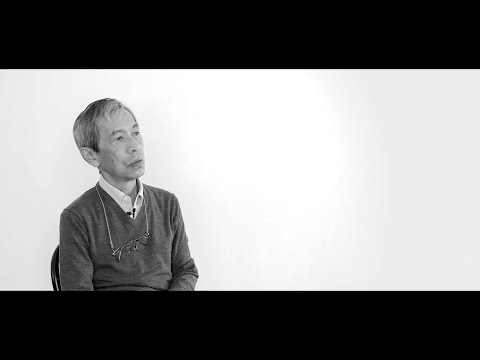

Can you tell us about your career to date?
About a year and a half after graduating from university, I started working for the City of Kobe. I was assigned to the Public Health Department of the Health Bureau, where I was in charge of environmental sanitation and food sanitation. For example, I was in charge of food poisoning control, sanitary management of public bathhouses, and hygiene guidance for restaurants.
Originally, I was a veterinarian and I wanted to work with animals. By a fortunate chance, I was assigned to Kobe Oji Zoo. That was about less than two years after I started working there, and from there I worked as a veterinarian for captive animals for about 22 years.
During that time, I was also involved in the protection and conservation of storks and reintroduce to the wild. I was also involved in work related to wildlife diseases, and I continued my study in genetics as a researcher at Hyogo Medical University.
In the meantime, I was approached by a university in Kanagawa Prefecture to lead a laboratory of wildlife science, where I served as a professor for 19 years.
During my tenure there, I was appointed to a committee called the Advisory Committee for Yokohama Zoos. During my tenure, the director of the zoo suddenly passed away and there was a vacancy in the position. I was asked to take on the position of director while continuing to work as a professor. This had continued for about five years.
Then, I retired from the university, and since the year before last, I have been serving as both the director of Yokohama Zoological Gardens "ZOORASIA" and as a counselor at the Preservation and Research Center, The City of Yokohama, which is also located within the ZOORASIA. Those are my two current titles.
It is actually quite rare for a university professor to be the zoo director. There are some precedents in other countries, but I think there have been only one or two cases in Japan.
Since coming to Yokohama, what have you been focusing on?
ZOORASIA is a zoo that is in a somewhat unique position in Japan, having been established with a focus on the breeding and conservation of endangered species. For this reason, we are making effort on captive breeding of endangered species such as the Okapi and the Proboscis monkeys, which are not found in other Japanese zoos.
At the same time, we also need to conserve their original habitat, so we are focusing on the environmental education.
In addition, as an international effort, we are cooperating with countries in Africa and Asia in local wildlife conservation activities.
What kind of efforts are you making in terms of education?
We are now changing our name from "environmental education" to "conservation education. This is to learn information and knowledge useful for the conservation of biodiversity, and we make use of the zoo environment, where we are very fortunate to be able to learn while actually seeing wild animals in front of us.
In this way, we believe it is important not only to convey to children and adults the importance of protecting animals, but also to raise awareness about the need to improve the environment in which those animals live.
We aim to bring about "behavioral change," or a change in behavior by learning about our own lives in Japan and our relationship with animals.
What exactly does this behavioral change look like?
For example, ZOORASIA offers a program called "ZOORASIA School." This is a six-month conservation education curriculum for 4th to 6th graders, and the children graduate after presenting what they have learned.
These children then go home and tell their families, "Turn off the lights," or "Separate the garbage properly. I believe this is a change in behavior.
I see. It may be difficult to change society as a whole immediately, but you are saying that we can change people's attitudes from the individual level.
Yes, that's right. Change the awareness of the individual, and start making changes little by little, starting with the things that are close to home. I believe that such cumulative efforts will be the driving force to change society.
Are there any other efforts you are making to achieve this?
We are making efforts to disseminate information on our website and blog, and when our zookeepers give guided tours, they talk about the connection between the environment and our daily lives.
For example, there is the reality that the jungles in Southeast Asia are being developed to extract palm oil, which is taking away the habitat of proboscis monkeys and elephants. By connecting these stories to our everyday situations, such as using soap or eating ramen noodles, we can change people's minds.
Are you considering a broader approach in the future?
Yes, we are. In the future, I would like to create a project called "ZOORASIA Sanctuary," which would involve the conservation of habitats for wild animals in Africa and Southeast Asia.
In fact, advanced zoos in Europe and the U.S. are already engaged in such activities. They are using the knowledge and techniques they have acquired in zoos to work on local habitat conservation and then applying the feedback to their exhibits and education.
So the role of zoos is changing in the context of global collaboration?
Yes, they are. For example, the World Association of Zoos and Aquariums (WAZA) has a message that zoos must be heroes of social change.
This may sound a bit exaggerated, but the idea is that visitors to zoos and aquariums can learn about conservation while having fun and stepping up their efforts, leading to the conservation of the global environment as a whole. That is the way of thinking. With these words in mind, I, too, would like to aim for social change, one step at a time, without being hasty.
Does the history of the zoo have the background of such changes?
Yes, it does. In fact, the history of zoos is very old, and there are records of breeding wild animals since the Egyptian period. Kings and aristocrats in China and ancient Egypt kept lions and tigers as symbols of their authority.
In Japan, traces of the keeping of wild animals have been found in ruins from the Asuka period.
Then, in modern times, as zoology and natural history developed, zoos came to have a meaning as places for research. In Paris and London, for example, zoos based on zoology were established. The London Zoo is a prime example of this, and its philosophy is still carried on today as the modern zoo.
Zoos originally started as symbols of authority, but through research, they have turned into places of conservation as we know them today.
At first, animal keeping was a personal hobby and status, but as zoology developed, people began to think not only about exhibits, but also about the habitats of these animals.
In the 1960s and 70s, the reality that habitats for wild animals were deteriorating rapidly became clear, and there was a growing awareness that zoos and aquariums should not just catch animals from the wild and exhibit them, but that they should focus on conservation.
Zoos today are following this trend and engaging in conservation activities, but there is still room for further development . There is a need for zoos to develop into a more advanced form. Zoo professionals around the world are thinking about evolution and change on a daily basis.
Japanese zoos are also being asked how they will achieve this development. How do you think social changes such as the declining birthrate are affecting this?
Japan is entering an era of declining birthrates and an aging population, and the age groups that use zoos are changing considerably. I think the role of zoos will change little by little as a result.
The main purpose of zoos has been to "attract visitors" and "entertainment," but it may shift more toward research, education, and conservation.
If the number of visitors decreases, it will be difficult to operate the zoo.
This is precisely the problem that zoos are facing now. If the number of visitors does not increase, operation will become difficult. That is why they think of events to attract visitors, but I ask myself, "Is that really the role of a zoo?
Do you have any episodes from your own experience that made you feel that way?
When I had just assumed the position of director, the City of Yokohama was expecting me to increase the number of visitors to the park , but the number did not increase as expected. So, I went to apologize to the director in charge of the city. I went to the city director and apologized, saying, "I'm sorry, we couldn't increase the number of visitors.
The director said, "Mr. Murata, is a zoo a place to attract visitors? He asked me, "Is that your goal?
That is an impressive statement.
I answered, "I don't think so. After all, a zoo is a place where children, in particular, can experience the excitement and surprise of seeing wild animals up close. Through this experience, they develop a desire to "conserve nature. The director used the term "sense of wonder." In other words, a sense of wonder and amazement about nature.
You yourself were reminded of that phrase, weren't you?
Yes, I did. I was aware of the term "sense of wonder," but I had to reflect on whether I had really valued it as the director of the school.
I knew that I should emphasize the "quality" rather than the "number". Rather than just chasing the number of visitors, I wanted to know how many people who came to the park were moved by the events, and how much they learned and realized. I believe that such "quality" will lead to the zoo's survival strategy in the future.
You say that environmental education is also based on "having fun and making people aware of the environment.
That is right. Environmental education is meaningless if it is too formal. No one pays money to come to a zoo to learn something difficult. We want people to learn something about nature while having a good time.
But behind that, we need the support of proper science and academics. There is basic knowledge and information, and how to convey it well. I think that is important.
There are many zoos in the world. Is there any zoo that left a lasting impression on you?
Yes, there are so many zoos in the world. Each zoo has a different way of thinking and showing their animals, but I think zoos that put a lot of effort into the "invisible parts" are amazing.
For example, the Bronx Zoo in New York City. It is world-famous and large in scale, but what they put special emphasis on is the backyard, that is, the part that is not visible to customers.
This is where they do full-scale breeding of wild animals and work to maintain the population.
So, behind the scenes of the exhibits, is there a strong conservation effort going on?
Yes, there is. And the zoo is run by an organization that used to be called the "New York Zoological Society" and is now called the "Wildlife Conservation Society (WCS). It's an organization dedicated to wildlife conservation.
This organization sends researchers to more than 30 countries to actually conduct conservation activities and research in the field. And they don't ask for much in return for their activities.
In the past, there was a trend to import animals for conservation, but not anymore. Instead of exploiting animals in the wild, we focus on "how to conserve their habitats" and reflect the resulting information on our exhibitions and explanations.
Are you saying that this attitude is highly valued and attracts support?
Yes, I am. That is why we have been able to attract supporters, in other words, donors. Some of them are wealthy people or large corporations, and they make large donations.
With the donations, we are able to do good activities, and it also helps the zoo itself to operate.
Are there such cases in Europe?
Yes, there are. For example, the Zoo Zurich in Switzerland. I have asked them how they collect donations, and they said, "It is not difficult to collect donations. What is difficult is how to use the donations in a way that reflects the wishes of the donors." They said, "If we can't do that, we won't be able to collect donations anytime soon." That was really impressive.
Finally, if you have a vision for the future of zoos or the future of the earth, please share it with us.
Yes. .... First of all, to be honest, I don't think the future of the earth that we can see now is so bright. We live in an age of anxiety in various aspects, including the environment, politics, the economy, and society.
However, that does not mean that we should just keep lamenting about it. In the environmental field, there is even a term called "ecophobia".
It refers to a state of mind in which people feel that the global environment is doomed, or that there are so many endangered species that no matter what we do, there is no point in doing anything about it. If young children, in particular, feel this way, they will lose their interest in the environment.
You are saying that they lose interest because of a sense of hopelessness.
That's right. To prevent this from happening, I think it is necessary for zoos to send out a positive message that the environment can still be restored and that the future can be changed.
I would like to continue to think together about "how we can make the future brighter," and continue to come up with ideas that will encourage people to change their behavior.
The movement to disseminate such messages is also linked to corporate and government initiatives.
In particular, the "TNFD," a framework for financial disclosure on biodiversity, has been launched, and large corporations around the world are required to report on it.
We are now in an era where companies can show their shareholders and investors "how much they have contributed to biodiversity conservation.
I believe this is a new trend toward integrating biodiversity conservation into economic activities. We believe that zoos can also play a new role in this context.
Since the 1970s, people have been asking, "Do we really need to kill mosquitoes?" and "Is it right to exterminate all cockroaches?"
The question is: Is a sterile world "clean"?
Indeed, it is difficult to answer this question with conventional values alone.
Yes, it is. Nowadays, people are thinking about the role that such creatures play in nature and how to get along with them.
Rather than simply exterminating them, we are seeking ways to coexist with them. Such efforts are spreading.
There are also the problems of resistance to antibiotics and pesticides, aren't there?
Yes, there are. Microorganisms and insects have a much longer evolutionary history than humans, so they have a very strong resistance.
Malaria prophylaxis and treatments have now become almost ineffective. In this sense, the approach of simply "eliminating" them may have reached its limits.
That is why we need to find a way to coexist.
That is right. Without a "foundation for survival" such as air, water, and soil, economic activities would not be possible.
More than social infrastructure, we need infrastructure to survive. Without conserving them, the steel and automobile industries would not be possible.
You feel that the future of the earth is not so bleak.
Yes, I do. I do not think that mankind is that stupid.
Humans are not so stupid as to destroy themselves.. I believe that there is still hope.